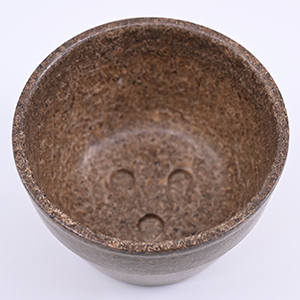
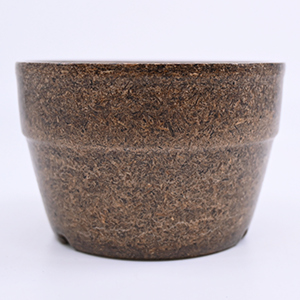
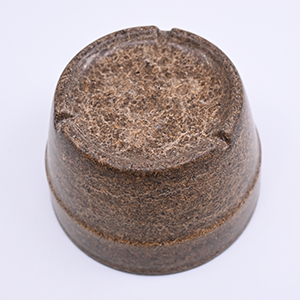
The Erren River Basin once prospered through its tradition of floating bamboo downstream. However, as bamboo groves have aged and become increasingly difficult to manage, thousands of kilograms of discarded bamboo have become difficult to dispose of each year. Research indicates that bamboo’s carbon-sequestration capacity is approximately three to five times that of ordinary broadleaf forests. Bambusa stenostachya can sequester approximately 50 metric tonnes of carbon per hectare each year, demonstrating the close relationship between bamboo-grove management and carbon sequestration. This bamboo planter is made primarily from discarded bamboo collected locally from the Erren River area. It consists of approximately 70% Bambusa stenostachya fibre, 20% starch and 10% food-grade binder. The product contains more than 98% organic matter as well as nitrogen. After use, it can naturally break down in approximately two years and become fertiliser, supporting the recovery and reuse of agricultural waste. The planter provides water retention and air permeability. Its useful life depends on environmental conditions but is generally between one and two years. Its raw-material supply chain has obtained Forest Stewardship Council (FSC) certification.more
You need to log in as a member to see the relevant information of the factory.
Member Login
Quick login
The Erren River Basin once prospered through its tradition of floating bamboo downstream. However, as bamboo groves have aged and become increasingly difficult to manage, thousands of kilograms of discarded bamboo have become difficult to dispose of each year. Research indicates that bamboo’s carbon-sequestration capacity is approximately three to five times that of ordinary broadleaf forests. Bambusa stenostachya can sequester approximately 50 metric tonnes of carbon per hectare each year, demonstrating the close relationship between bamboo-grove management and carbon sequestration. This bamboo planter is made primarily from discarded bamboo collected locally from the Erren River area. It consists of approximately 70% Bambusa stenostachya fibre, 20% starch and 10% food-grade binder. The product contains more than 98% organic matter as well as nitrogen. After use, it can naturally break down in approximately two years and become fertiliser, supporting the recovery and reuse of agricultural waste. The planter provides water retention and air permeability. Its useful life depends on environmental conditions but is generally between one and two years. Its raw-material supply chain has obtained Forest Stewardship Council (FSC) certification.





 ❖ Breathe