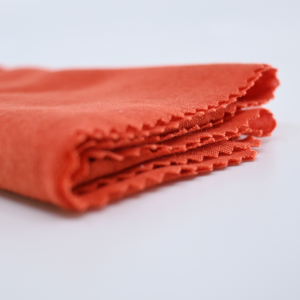
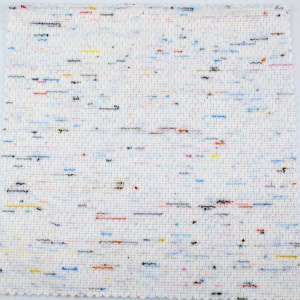
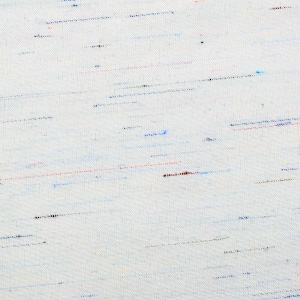
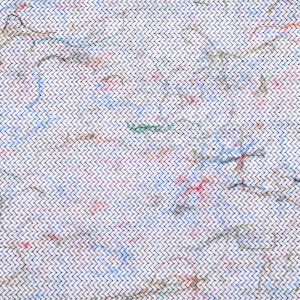
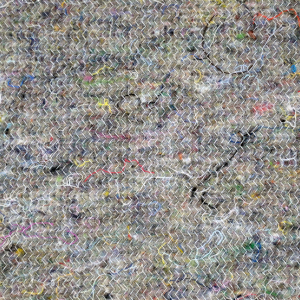
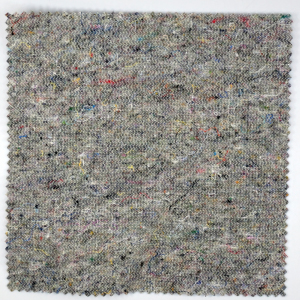
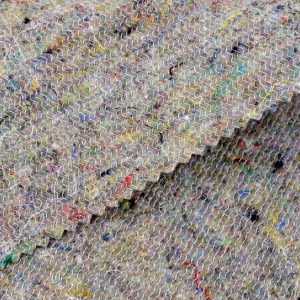
This fabric is made from a staple-fibre blend consisting of 90% recycled textiles and 10% polyester fibre. The blend is processed into finished fabric using a nonwoven manufacturing process and is subsequently strengthened through methods such as sewing and needle punching. Mechanical recycling technology is used, reducing the use of chemicals and eliminating the need for additional dyeing. This lowers energy consumption and carbon emissions while substantially reducing wastewater generation. The product can be recycled again after use, forming a circular system of resource reuse.The blend is processed into finished fabric using a nonwoven manufacturing process and is subsequently strengthened through methods such as sewing and needle punching. The nonwoven fabric offers good absorbency and formability. It can also be combined with thermoplastic elastomer (TPE) under heat and pressure to improve its abrasion resistance and strength. The fabric can be used to manufacture bags, footwear materials and sporting equipment, combining environmental and functional properties.The material was selected as one of the Top 10 innovative products at the ISPO Textrends Awards in Germany.more
You need to log in as a member to see the relevant information of the factory.
Member Login
Quick login
This fabric is made from a staple-fibre blend consisting of 90% recycled textiles and 10% polyester fibre. The blend is processed into finished fabric using a nonwoven manufacturing process and is subsequently strengthened through methods such as sewing and needle punching. Mechanical recycling technology is used, reducing the use of chemicals and eliminating the need for additional dyeing. This lowers energy consumption and carbon emissions while substantially reducing wastewater generation. The product can be recycled again after use, forming a circular system of resource reuse.The blend is processed into finished fabric using a nonwoven manufacturing process and is subsequently strengthened through methods such as sewing and needle punching. The nonwoven fabric offers good absorbency and formability. It can also be combined with thermoplastic elastomer (TPE) under heat and pressure to improve its abrasion resistance and strength. The fabric can be used to manufacture bags, footwear materials and sporting equipment, combining environmental and functional properties.The material was selected as one of the Top 10 innovative products at the ISPO Textrends Awards in Germany.





 ▽ Low-carbon