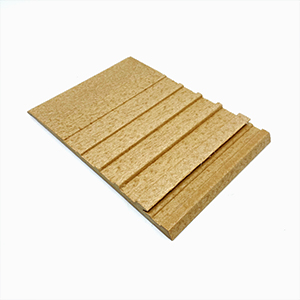
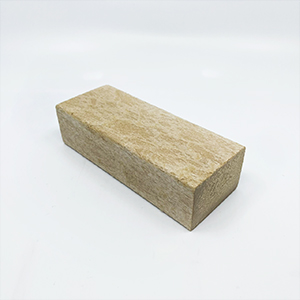
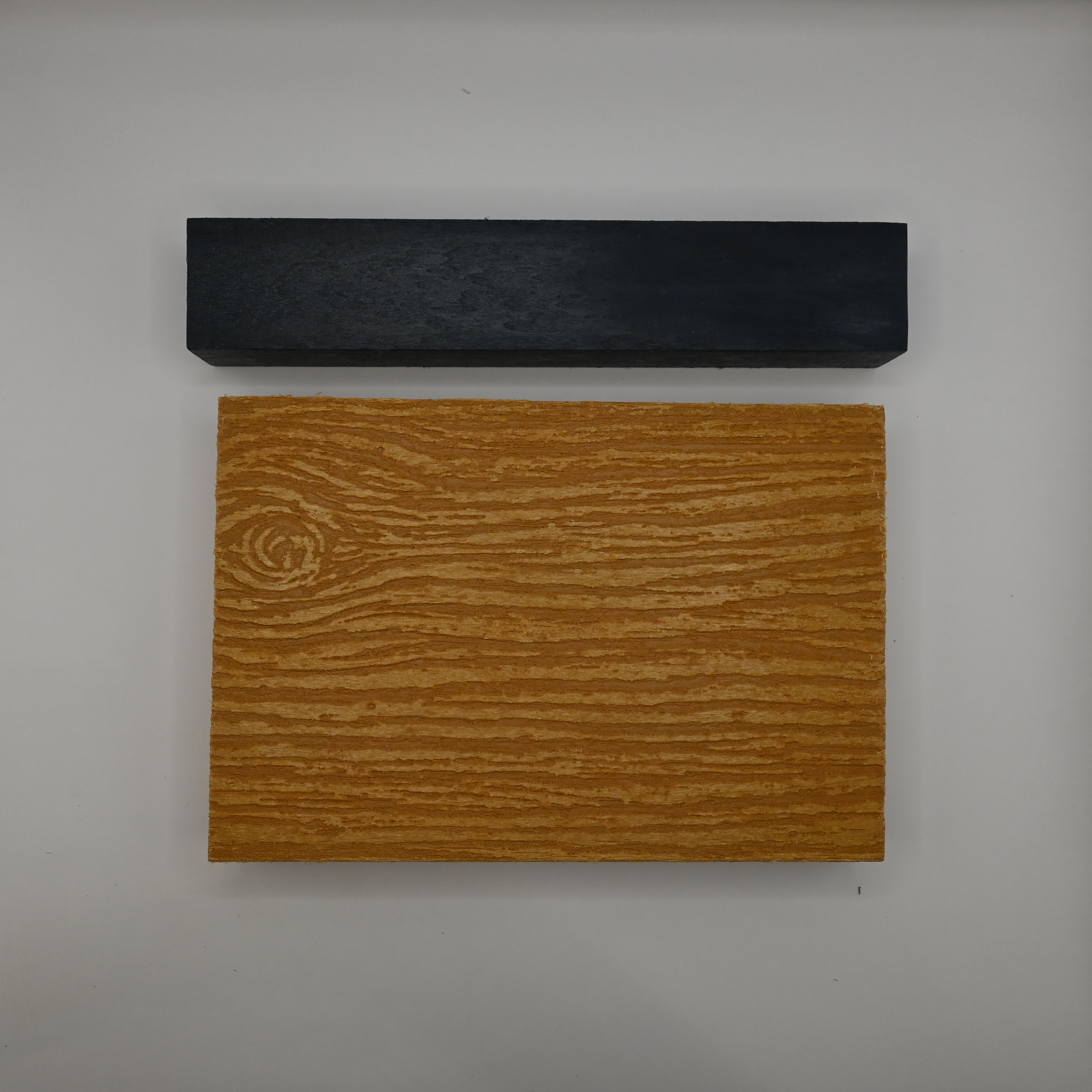
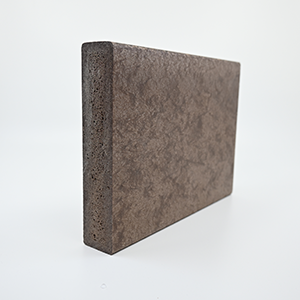
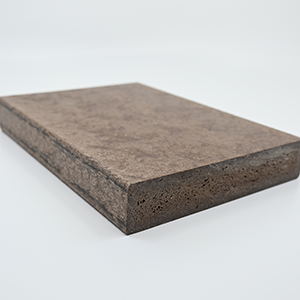
This material is made from recycled polystyrene (rPS) recovered from the housings of discarded electrical appliances, such as air conditioners, televisions and washing machines. The recovered plastic undergoes shredding, washing, drying, extrusion and embossing to produce an imitation-wood building material with an interwoven, layered long-chain structure. The material is waterproof and resistant to corrosion and decay. SGS testing has confirmed that it contains no formaldehyde. It has also obtained recycled-plastic traceability certification, ISO 14067 product carbon-footprint verification. It offers high toughness, corrosion resistance and strength, with a service life of up to 20 years. As it contains no plant fibres, it can be recovered and recycled after use. The material is currently being tested as a maintenance walkway at a solar-panel test facility. It may subsequently be used for solar-panel supports and outdoor landscaping materials, providing the industry with a low-carbon option that offers both environmental and cost benefits. Its carbon emissions are 2.399 kg CO₂e.more
You need to log in as a member to see the relevant information of the factory.
Member Login
Quick login
This material is made from recycled polystyrene (rPS) recovered from the housings of discarded electrical appliances, such as air conditioners, televisions and washing machines. The recovered plastic undergoes shredding, washing, drying, extrusion and embossing to produce an imitation-wood building material with an interwoven, layered long-chain structure. The material is waterproof and resistant to corrosion and decay. SGS testing has confirmed that it contains no formaldehyde. It has also obtained recycled-plastic traceability certification, ISO 14067 product carbon-footprint verification. It offers high toughness, corrosion resistance and strength, with a service life of up to 20 years. As it contains no plant fibres, it can be recovered and recycled after use. The material is currently being tested as a maintenance walkway at a solar-panel test facility. It may subsequently be used for solar-panel supports and outdoor landscaping materials, providing the industry with a low-carbon option that offers both environmental and cost benefits. Its carbon emissions are 2.399 kg CO₂e.





 ®Regenerated