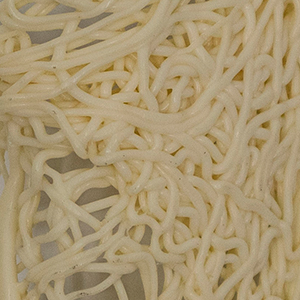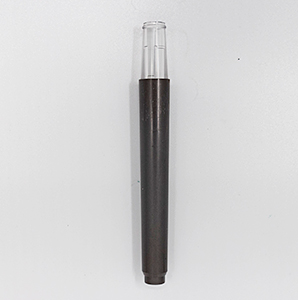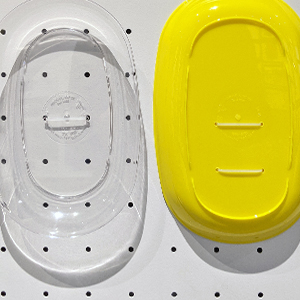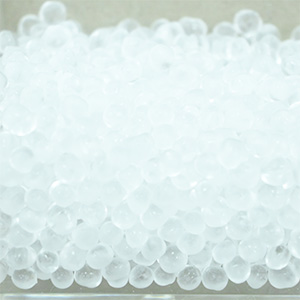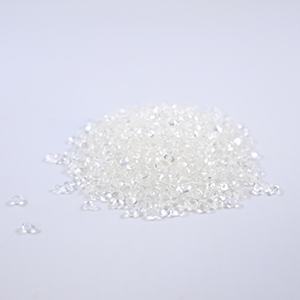
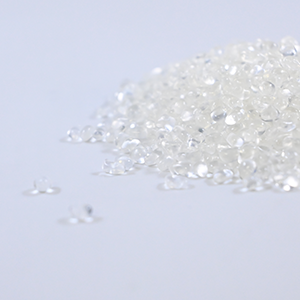
Ethylene–vinyl alcohol copolymer (EVOH) is produced by first copolymerising ethylene with vinyl acetate (VAc) to form ethylene–vinyl acetate copolymer (EVA). The EVA then undergoes saponification under alkaline conditions, converting its acetate groups into hydroxyl groups (–OH) to form the EVOH structure. After the reaction, the material is washed to remove by-products, dehydrated and dried, and then processed through melt extrusion and pelletisation to produce EVOH resin pellets. EVOH offers good gas-barrier properties. However, because its molecular chains contain hydrophilic hydroxyl groups, its gas-barrier performance decreases in high-humidity environments, and its resistance to water vapour is relatively low. In practice, EVOH is therefore commonly incorporated into multilayer co-extruded structures with polyethylene (PE), polypropylene (PP) or polyethylene terephthalate (PET) to provide both gas- and water-vapour-barrier properties. EVOH can be processed through extrusion moulding, blown-film extrusion, cast-film extrusion, co-extrusion and coating to produce high-barrier films, sheets, containers and multilayer packaging materials. Its excellent oxygen-barrier properties reduce the amount of oxygen entering a package. It is widely used in food packaging, medical packaging, cosmetic containers and packaging for other products requiring an extended shelf life.more
You need to log in as a member to see the relevant information of the factory.
Member Login
Quick login

Ethylene–vinyl alcohol copolymer (EVOH) is produced by first copolymerising ethylene with vinyl acetate (VAc) to form ethylene–vinyl acetate copolymer (EVA). The EVA then undergoes saponification under alkaline conditions, converting its acetate groups into hydroxyl groups (–OH) to form the EVOH structure. After the reaction, the material is washed to remove by-products, dehydrated and dried, and then processed through melt extrusion and pelletisation to produce EVOH resin pellets. EVOH offers good gas-barrier properties. However, because its molecular chains contain hydrophilic hydroxyl groups, its gas-barrier performance decreases in high-humidity environments, and its resistance to water vapour is relatively low. In practice, EVOH is therefore commonly incorporated into multilayer co-extruded structures with polyethylene (PE), polypropylene (PP) or polyethylene terephthalate (PET) to provide both gas- and water-vapour-barrier properties. EVOH can be processed through extrusion moulding, blown-film extrusion, cast-film extrusion, co-extrusion and coating to produce high-barrier films, sheets, containers and multilayer packaging materials. Its excellent oxygen-barrier properties reduce the amount of oxygen entering a package. It is widely used in food packaging, medical packaging, cosmetic containers and packaging for other products requiring an extended shelf life.