“The Key to Reducing the Greenhouse Effect: Climate Change Mitigation × Adaptation Exhibition Achieves Carbon Neutrality” Sustainable Materials Library Continues to Promote Sustainable, Low-Carbon Exhibitions
Feb 10, 2025


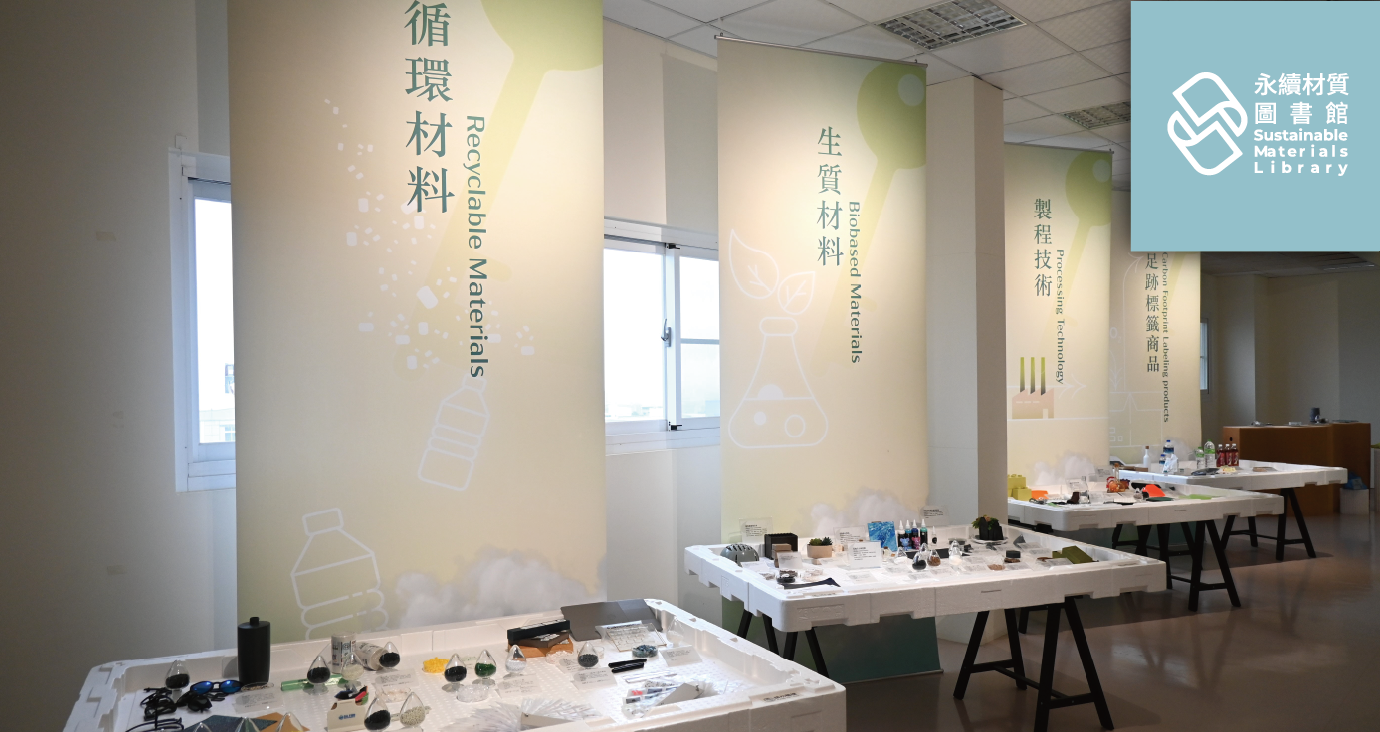
At its latest sustainability exhibition, “The Key to Reducing the Greenhouse Effect: Climate Change Mitigation × Adaptation”, the Sustainable Materials Library, established by the Plastics Industry Development Center, conducted a carbon-footprint inventory for the exhibition by establishing a greenhouse-gas emissions baseline. Through voluntary emissions-reduction measures, the formulation of an emissions-reduction plan and the retirement of carbon credits issued under the Verra programme, the exhibition successfully achieved “carbon neutrality” on 30 January 2024.
This achievement demonstrates the Sustainable Materials Library’s success in actively reducing the carbon footprint of its exhibitions and promoting environmental sustainability. It also reflects the Library’s commitment to advancing the global transition towards a greener future.

In response to the global goal of achieving net-zero emissions by 2050, the Sustainable Materials Library opened the special exhibition "The Key to Reducing the Greenhouse Effect-Climate Change Mitigation x Adaptation" in August 2023. The exhibition presents visitors with two key strategies: "Mitigation" and "Adaptation".
"Mitigation" involves reducing greenhouse gas emissions through measures such as the low-carbon circular use of materials, energy-efficient production technologies and the disclosure of carbon information through greenhouse gas inventories, followed by the formulation of emissions-reduction plans.
"Adaptation" refers to the changes made by businesses and the products they develop in response to the new conditions brought about by climate change.
The special exhibition brings together approximately 150 energy-saving and carbon-reducing materials and applied products from across Taiwan. It shows how waste- and carbon-reduction principles can be incorporated into every stage of a product’s life cycle. The team also adopted a range of carbon-reduction measures when designing and setting up the exhibition.

More than ten banners suspended from the ceiling establish the atmosphere and theme of the exhibition. They are made from "P-Tex Recycled Non-Woven Fabric".
The P-Tex fabric is manufactured without the use of chemical agents and has obtained the Global Recycled Standard and WELL certifications. It offers high opacity, requires no backing paper and is resistant to tearing. It can also be easily removed in one piece during dismantling, avoiding the residue commonly left by conventional wallpaper, and can be reused in different settings.

The "display platforms" used for different exhibits are also made from carefully selected materials. They are made from "honeycomb paper" that has obtained Forest Stewardship Council certification. The paper is bonded in an alternating I-shaped pattern to form hollow regular hexagons, which are then assembled into a honeycomb paper core. The structure is strong and has a good load-bearing capacity, making it a suitable alternative to wood. Its distinctive collapsible structure not only saves space during transportation but also allows for a variety of creative display arrangements.
In addition, the "expanded polystyrene foam" originally used as disposable packaging to protect large machinery has been repurposed as display platforms at the Sustainable Materials Library’s special exhibition. Its distinctive porous honeycomb structure provides excellent insulation, impact resistance and heat retention. It has been reused for more than four years and has met the Sustainable Materials Library’s various exhibition needs, reflecting the curatorial team’s commitment to circular reuse.

Even the SML sign, which is the heaviest item and appears to generate the greatest carbon emissions, makes use of sustainable materials.
In addition to incorporating waste oyster-shell powder to provide antibacterial properties and extend its service life, the sign is produced using an additive 3D-printing process in which the material is built up layer by layer. Unlike conventional subtractive processes (such as engraving and cutting), this method effectively reduces the waste of raw materials and moulds, thereby achieving tangible reductions in waste and carbon emissions.
The exhibition planning and sustainable design begin at the source. In addition to the use of sustainable materials, the lightweight, modular design allows the exhibition to be moved to different locations and adapted to the spatial characteristics of each location, maximising its promotional and educational reach.
Paperless applications and the digital delivery of information for visitors have also been implemented throughout the exhibition area. QR codes are used for promotional and educational purposes while ensuring that knowledge can be shared conveniently and promptly, allowing visitors to keep up to date with the latest industry developments.
Beginning with the special exhibition "The Key to Reducing the Greenhouse Effect-Climate Change Mitigation x Adaptation", the Sustainable Materials Library calculated the carbon emissions generated throughout the exhibition process, from theme planning, exhibit collection, installation and opening to promotion and the visitor experience. It then independently formulated an emissions-reduction action plan and ultimately achieved carbon neutrality through a carbon-credit trading mechanism. Exhibitions no longer need to merely consume resources; they can also achieve net zero!
The Plastics Industry Development Center team has also affirmed its commitment to developing sustainable materials and promoting circular-economy industry chains.
As the global economy shifts towards low-carbon development, businesses may face higher operating costs as a result of their carbon emissions, while the effectiveness of their low-carbon measures will directly affect their profits.
The Sustainable Materials Library’s special exhibition fulfilled its carbon-neutrality commitment through an independently conducted carbon inventory and emissions-reduction measures. The team brings together professionals in green exhibition design and green marketing, as well as specialists in carbon inventories and emissions-reduction guidance. It will actively assist businesses with their own emissions-reduction efforts and supply-chain collaboration, implementing the circular economy through carbon and waste reduction to achieve energy conservation and lower carbon emissions.
The Sustainable Materials Library is an open platform for learning and visits. It welcomes enquiries from different sectors and fields regarding collaboration, material matching and the planning of exhibition requirements. It looks forward to working with others to promote environmental sustainability and contribute fully to achieving net zero!